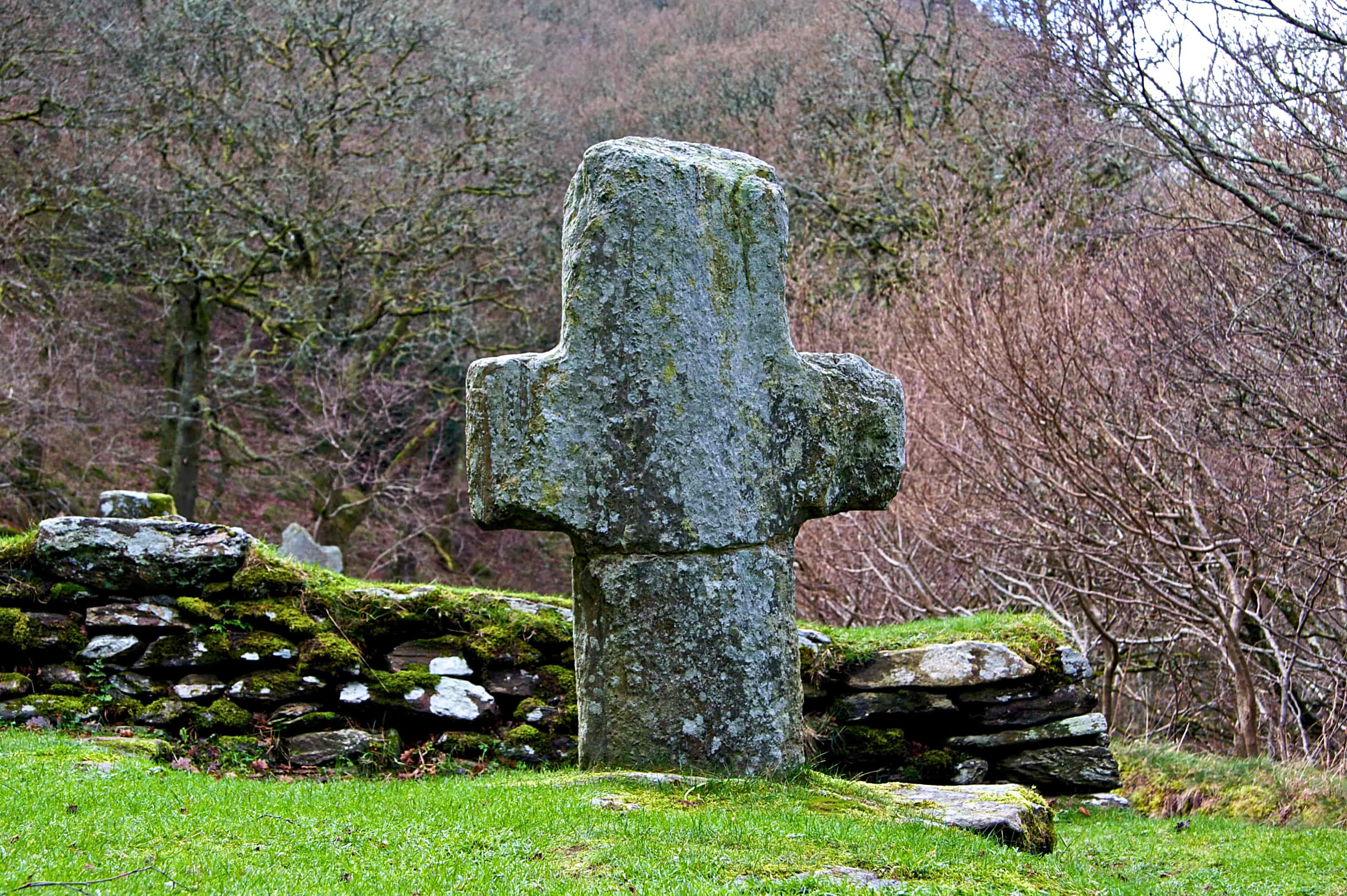
Glendalough translates from Irish as "Valley of the Two Lakes" — Gleann Dá Loch — and the name tells you most of what you need to know about the setting. A glacially carved valley deep in the Wicklow Mountains of County Wicklow, roughly an hour south of Dublin, with two dark lakes reflecting steep forested hillsides and stone ruins that have been standing since the 6th century. The valley was formed during the Ice Age. The lakes came when the glaciers retreated. The monastery came when a hermit monk named St. Kevin arrived looking for solitude around 498 AD and found it here in a cave above the upper lake.
What St. Kevin started became one of the most important religious and scholarly centers in early medieval Europe. The monastery ran for over 900 years, producing manuscripts, attracting pilgrims, and eventually drawing Viking raids. The round tower — 112 feet tall, still standing — served as both a beacon for arriving pilgrims and shelter when the raids came. According to tradition, to be buried at Glendalough was considered equal to burial in Rome. The site fell into decline after 1214 when it was absorbed into the Diocese of Dublin, leaving behind the ruins visible today.
What makes Glendalough exceptional for this collection is the combination of natural setting and human history operating at the same scale. The lakes, the forest, the mountain terrain, and the stone ruins all belong together here — none of it feels placed or preserved artificially. Wildlife moves through the national park surrounding the valley. The hiking trails are serious. The light on the water in early morning, the mist that settles into the valley in autumn, and the quality of the stonework against the green landscape make this one of the more photographically compelling locations in all of Europe.